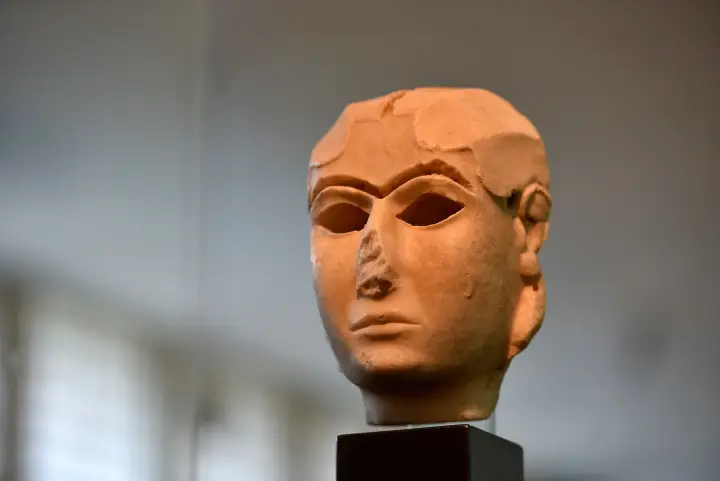

Uruk matters because it is one of the earliest large cities in human history, and the earliest known writing appeared there around 3300–3200 BCE. Writing began as a way to record accounts and stores, and later became a way to keep literature, religion and law. Uruk is also the city of Gilgamesh, hero of Mesopotamia's best-known epic, and its wall runs for about nine kilometres. Rare works of art came from it, such as the Mask of Warka and the Warka Vase, both kept in the Iraq Museum. The city lived for thousands of years, German archaeologists have worked there for over a century, and it is part of the Ahwar World Heritage site.
One of the first great cities in human history and the city of the legendary king Gilgamesh. The earliest known writing appeared here, making Uruk the birthplace of record-keeping.
Its wall runs for about nine kilometres, and German archaeologists have worked here for over a century. The Mask of Warka, one of the earliest known sculptures of a human face, came from here and is now in the Iraq Museum.
Notable factThe ziggurat of Inanna at Uruk was built in the reign of Ur-Nammu, about 2110 BCE.
Visitor guide
Approximate straight-line distance; the road is longer.
Best time: Roughly November to March. Summers in the south are extremely hot, often above 45°C, so avoid midday visits in summer.
Practical tips:
- Arrange your visit in advance with the Muthanna Antiquities Inspectorate; archaeological sites are protected and guarded.
- Bring plenty of water, a hat and sun protection; most sites have no shade or services.
- Do not walk on exposed walls or pick up any sherd or stone; Iraq's Antiquities and Heritage Law No. 55 of 2002 forbids it.
Getting there
In the Muthanna desert, about 30 km east of Samawah. The site is vast and open; it is best visited in winter, with a guide from the Muthanna Antiquities Inspectorate.
Photos of the site


Sources
Information last reviewed: November 2026. Dates are approximate.