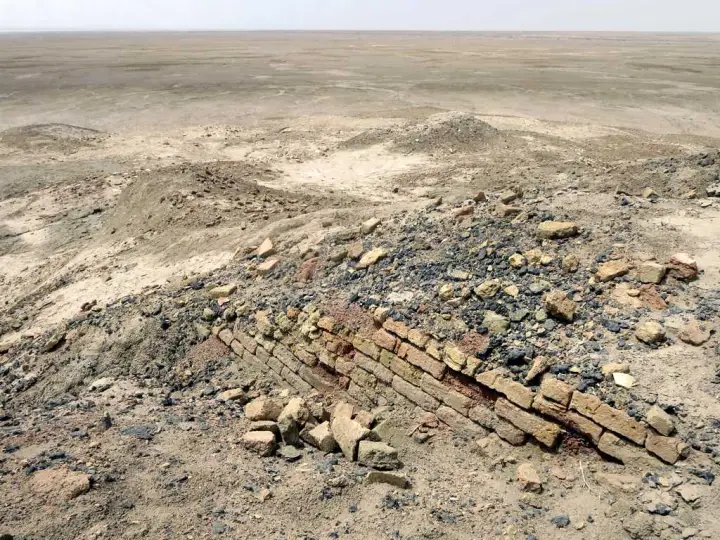

Eridu matters because it is one of the oldest settlements in southern Iraq, and because the Sumerians themselves, in the Sumerian King List, saw it as the first city to receive kingship. It was the city of Enki, god of fresh water and wisdom. The most important result of the excavations by Fuad Safar and Seton Lloyd in 1946–1949 was a sequence of temples, each built on top of the one before, from the Ubaid period to the third millennium BCE. This sequence shows how the temple grew from a small building into a large monument, and how one place stayed sacred for thousands of years. Eridu is part of the Ahwar World Heritage site.
According to the Sumerian King List, it was the first city where kingship came down from heaven. It was the centre of the cult of Enki, god of fresh water and wisdom.
Temples were built here one on top of another for thousands of years. Fuad Safar and Seton Lloyd excavated it between 1946 and 1949. Today it is part of the Ahwar World Heritage site.
Notable factIts sequence of superimposed temples is one of the oldest examples of a sacred place where worship continued for thousands of years.
Visitor guide
Approximate straight-line distance; the road is longer.
Best time: Roughly November to March. Summers in the south are extremely hot, often above 45°C, so avoid midday visits in summer.
Practical tips:
- Arrange your visit in advance with the Dhi Qar Antiquities Inspectorate; archaeological sites are protected and guarded.
- Bring plenty of water, a hat and sun protection; most sites have no shade or services.
- Do not walk on exposed walls or pick up any sherd or stone; Iraq's Antiquities and Heritage Law No. 55 of 2002 forbids it.
Getting there
About 12 km south-west of Ur, deep in the desert on an unpaved track. You need a suitable vehicle and prior arrangement with the Dhi Qar Antiquities Inspectorate.
Photos of the site


Sources
Information last reviewed: November 2026. Dates are approximate.