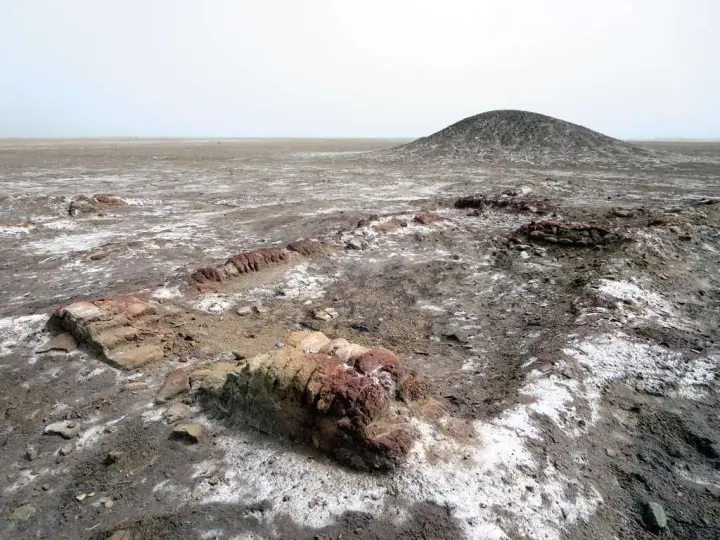

Lagash matters because it was one of the largest Sumerian cities and the political and economic centre of a state that included Girsu and Nina. Its rulers included Eannatum, of the Stele of the Vultures, and Urukagina, whose texts contain the word amagi, considered the oldest known word for freedom. Its long dispute with Umma over the Gu-Edin land is one of the oldest border conflicts recorded in writing. Since 2019 a team from the Universities of Pennsylvania and Cambridge has worked there with Iraqi archaeologists, and in 2022 it found the remains of a public eatery about five thousand years old, showing the lives of ordinary people, not only kings.
One of the largest Sumerian cities by area, it was the political and economic centre of the state of Lagash, which also included Girsu and Nina.
Since 2019 a joint team from the Universities of Pennsylvania and Cambridge has worked here with Iraqi archaeologists, and recent surveys show it was a densely populated city with several economic centres.
Notable factIn 2022 the team uncovered the remains of a public eatery about five thousand years old, with benches, ovens and a kind of clay 'fridge' for keeping food.
Visitor guide
Approximate straight-line distance; the road is longer.
Best time: Roughly November to March. Summers in the south are extremely hot, often above 45°C, so avoid midday visits in summer.
Practical tips:
- Arrange your visit in advance with the Dhi Qar Antiquities Inspectorate; archaeological sites are protected and guarded.
- Bring plenty of water, a hat and sun protection; most sites have no shade or services.
- Do not walk on exposed walls or pick up any sherd or stone; Iraq's Antiquities and Heritage Law No. 55 of 2002 forbids it.
Getting there
East of Shatra, near the edge of the marshes. There are no facilities on site; visits are arranged with the Dhi Qar Antiquities Inspectorate.
Photos of the site


Sources
Information last reviewed: November 2026. Dates are approximate.