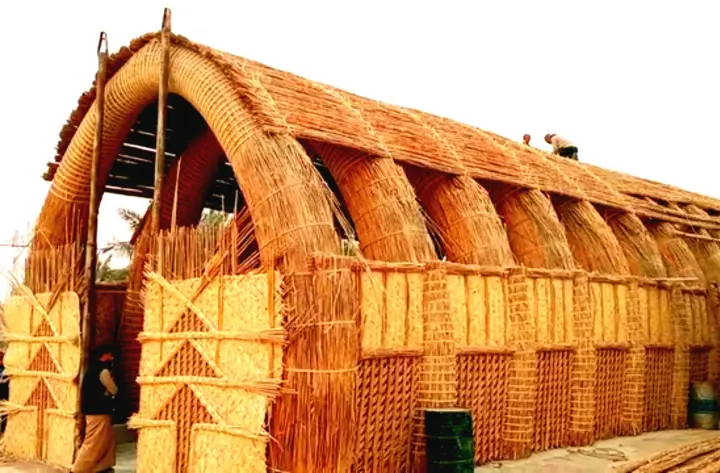

The Ahwar matter because they are among the largest wetlands in the Middle East and preserve an environment in which the Sumerians lived thousands of years ago. UNESCO inscribed them in 2016, with Ur, Uruk and Eridu, as a mixed natural and cultural site of seven components: four marshes and three cities. They are an important stop for migratory birds and home to rare species. People there still build reed mudhifs and travel by mashoof. The marshes were drained in the 1990s to about a tenth of their size, and water returned to parts of them after 2003, so today they are a living heritage that needs protection.
In 2016 UNESCO inscribed them, together with Ur, Uruk and Eridu, as a mixed cultural and natural site named 'The Ahwar of Southern Iraq: Refuge of Biodiversity and the Relict Landscape of the Mesopotamian Cities'.
The property has seven components: four marshes and three Sumerian cities. Its people still live by reed and water, as their ancestors did.
Notable factThe reed mudhif that marsh people build today resembles the reed houses carved on Sumerian seals five thousand years ago.
Visitor guide
Approximate straight-line distance; the road is longer (to the Central Marshes).
Best time: Roughly October to April, when the weather is mild. Summer is very hot and humid.
Practical tips:
- Go out on the water only with local boatmen, wear a life jacket if one is offered, and respect people's homes and guesthouses.
- Bring plenty of water, a hat and sun protection; the sun is strong on the water.
- Do not throw rubbish in the water or disturb birds and fish; the marshes are a World Heritage site and a living environment that people depend on.
Getting there
The easiest for visitors are the Central Marshes, reached from Chibayish in Dhi Qar, where mashoof boat trips are available. The best time to visit is October to April.
Photos of the site


Sources
Information last reviewed: November 2026. Dates are approximate.